Solar calculator
PV System Size, Battery & Cost Estimator
Solar Calculator – PV System, Batteries & Cost Estimation حاسبة الطاقة الشمسية – حساب الألواح، البطاريات والكلفة
This solar calculator helps you estimate the required photovoltaic (PV) system size based on your daily energy consumption.
It calculates the number of solar panels, battery capacity, and provides a rough cost estimation.
تساعدك حاسبة الطاقة الشمسية هذه على تقدير حجم منظومة الطاقة الشمسية المطلوبة بناءً على استهلاكك اليومي للطاقة.
كما تقوم بحساب عدد الألواح الشمسية، سعة البطاريات، وتقدير الكلفة التقريبية للنظام.
Solar Calculator – PV System, Batteries & Cost
Estimate PV size, panel count, seasonal tilt angles, battery bank for backup hours, and total cost. Includes yearly energy and charts. Works best when you enter your location (latitude) and peak sun hours.
Inputs
Professional SizingResults
—| Item | Value |
|---|---|
| — | — |
 Solar PV System Engineering Equations
معادلات تصميم منظومة الطاقة الشمسية (هندسية)
Annual Solar Energy
YearEstimated yearly PV energy output.
تقدير الطاقة السنوية المنتجة من المنظومة.
PV Array Sizing
SizeRequired PV power from daily energy.
قدرة الألواح المطلوبة حسب الاستهلاك اليومي.
Number of Panels
PanelsPanels count based on module power.
عدد الألواح حسب قدرة اللوح الواحد.
Battery Capacity
BatteriesTotal Ah needed for autonomy days.
السعة المطلوبة للأيام الاحتياطية.
Tilt Angle (Works for All Seasons)
AngleFixed + seasonal tilt rules (professional quick method).
Where: \(\varphi\) = latitude (city latitude).
قاعدة زاوية الميل الثابتة + لكل فصل (طريقة سريعة معتمدة).
حيث \(\varphi\) = خط عرض المدينة.
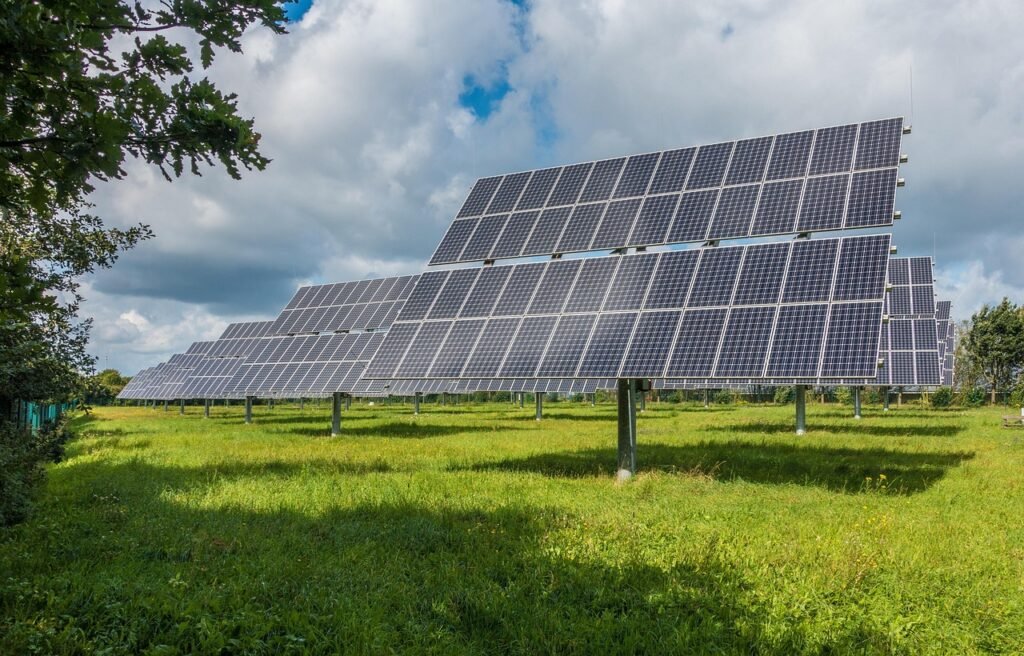

Solar Power System Sizing Calculator: PV Array, Battery Bank, Inverter Rating & Cost Estimation (Technical Guide)
This page combines a practical Solar Calculator with a technical, engineering-style explanation of the formulas used to size a
photovoltaic (PV) system. It helps estimate PV size (kW), number of panels, battery capacity (kWh/Ah),
inverter rating (kW), seasonal tilt angles, and total cost—for worldwide use, including Middle East conditions.
1) How to Use the Solar Calculator (Engineering Workflow)
- Measure your energy demand (kWh/day). Use your electricity bill or a load list.
- Select your solar resource (PSH, Peak Sun Hours). Use local average PSH for your city/region.
- Pick a realistic Performance Ratio (PR). Typical range: 0.70–0.85 depending on temperature, wiring, dust, inverter quality and shading.
- Choose panel power (W) and system type: on-grid, off-grid or hybrid.
- Set backup hours and battery constraints (DoD, efficiency) if you need storage.
- Run the calculator and then read the technical notes below to refine assumptions.
Tip: For accuracy, start conservative: higher losses, realistic PSH, and a safety margin.
After you get the first result, tune PR, DoD and autonomy hours based on your real site conditions.
2) Input Parameters (What They Mean)
2.1 Daily Energy Consumption (kWh/day)
This is the total electrical energy you use per day. If your monthly bill shows energy in kWh/month, a quick estimate is:
kWh/day ≈ (kWh/month) ÷ 30. For workshops and offices, separate daytime and nighttime loads if you plan hybrid/off-grid.
2.2 Peak Sun Hours (PSH)
PSH is the daily equivalent hours of “full sun” at 1 kW/m². Example: PSH = 5.6 means your panels receive energy similar to
5.6 hours of full-rated sunlight. PSH depends on season, clouds, dust, tilt and location.
2.3 Performance Ratio (PR)
PR captures real-world losses: temperature derating, inverter efficiency, DC/AC conversion, cable losses, mismatch, dust and shading.
Typical values:
0.70 (hot climate + dust, average hardware) to 0.85 (good design, clean arrays, high-quality inverter).
2.4 Panel Power (W) and Array Size (kW)
Panel power is the module’s rated output under STC conditions. Your real output is lower in heat.
Array size (kW) is the sum of all panel ratings: PV(kW) = (Panels × PanelW) / 1000.
2.5 Battery Backup Hours, DoD and Efficiencies
Backup hours define how long you want loads supported when solar is low or grid is off. Battery sizing depends on:
Average load (kW), backup hours, Depth of Discharge (DoD), and system efficiency.
LiFePO₄ typically supports higher usable DoD than lead-acid.
3) Engineering Methods & Core Equations
3.1 PV Array Sizing (kW)
A common engineering approximation for daily energy balance is:
PV_kW = DailyEnergy_kWh / (PSH × PR) Where: – DailyEnergy_kWh = your daily consumption – PSH = peak sun hours (h/day) – PR = performance ratio (0.70–0.85 typical)
After PV_kW is known, the number of panels is:
Panels = ceil( PV_kW × 1000 / PanelW ).
Use a safety margin (5–20%) if you expect heavy dust, high summer temperatures, or aging.
3.2 Battery Bank Sizing (kWh and Ah)
For backup design, estimate required battery energy:
Battery_kWh_required = (AvgLoad_kW × BackupHours) / (DoD × η_total) Where: – AvgLoad_kW = average load during backup – BackupHours = required autonomy time – DoD = usable depth of discharge (e.g., 0.8 for LiFePO4, 0.5 for lead-acid) – η_total = total efficiency (battery + inverter + wiring), commonly 0.85–0.92
To convert battery energy to amp-hours at system voltage:
Ah ≈ (Battery_kWh × 1000) / V_system.
Example: 10 kWh at 48 V ⇒ Ah ≈ (10×1000)/48 ≈ 208 Ah (ideal). In practice, include margins and manufacturer limits.
3.3 Inverter Sizing (kW) and Surge Loads
Inverter sizing depends on peak instantaneous power and motor surge currents. For typical homes:
- Continuous rating ≥ peak expected load (kW) × safety factor (1.2–1.4).
- Surge rating must support motor starts (pumps, AC compressors) often 2–6× running current.
Engineering note: Many system failures are caused by under-sized inverters or ignoring surge loads.
Always check motor starting current, and consider soft-starters or VFDs for pumps.
3.4 Annual Energy Estimation (kWh/year)
For yearly estimation, convert daily energy to annual:
E_year ≈ E_day × 365. For more detail, use seasonal PSH (summer/winter) and average them.
AnnualEnergy_kWh ≈ PV_kW × PSH_avg × PR × 365 Where PSH_avg is the average daily PSH over the year.
4) PV Tilt Angle Recommendations (All Seasons)
Tilt angle affects annual yield. A practical rule used in many engineering guides is based on latitude:
Fixed tilt (annual) ≈ Latitude Summer tilt ≈ Latitude − 15° Winter tilt ≈ Latitude + 15°
This is a strong starting point. Roof constraints, shading, and wind loading may require adjustments.
In very dusty areas, slightly steeper angles help self-cleaning during rain and reduce dust accumulation.
5) Cost Estimation (Practical Notes)
Total cost varies by country and quality. A simplified method is to split cost into:
PV modules, inverter/charger, batteries, and BOS (balance-of-system: rails, cables, breakers, fuses, combiner box, grounding, labor).
- Panels: cost per watt × total watts.
- Batteries: cost per kWh × required storage.
- BOS + Installation: typically 15–35% depending on complexity and region.
Recommendation: Always include protection and safety components (DC isolator, surge protection, proper grounding).
Cutting BOS cost too much usually causes reliability and safety issues.
6) Practical Worked Examples (Quick Checks)
Example A: Small Home (8 kWh/day)
- Daily energy: 8 kWh/day
- PSH: 5.0
- PR: 0.75
PV_kW ≈ 8 / (5×0.75) ≈ 2.13 kW → choose ~2.5 kW for margin.
Example B: Medium Home (15 kWh/day)
PV_kW ≈ 15 / (5.6×0.75) ≈ 3.57 kW → choose ~4.0–4.5 kW depending on dust and heat.
Example C: Off-Grid Backup (Avg load 1.5 kW, 8 hours)
Battery_kWh ≈ (1.5×8)/(0.8×0.9) ≈ 16.7 kWh (LiFePO₄, DoD 80%, efficiency 90%).
This is a realistic size for stable backup without deep cycling damage.
7) FAQ (Common Questions)
How many solar panels do I need?
Divide the required PV size (kW) by the panel rating (kW). Example: 4 kW system with 620 W panels:
Panels ≈ 4000/620 ≈ 6.45 → 7 panels (then add margin if needed).
What Performance Ratio (PR) should I use?
Use 0.70–0.75 for hot climates with dust and average hardware. Use 0.80–0.85 for high-quality design, minimal shading,
strong inverter efficiency, and good maintenance (cleaning).
Do I need batteries for solar?
On-grid systems may not require batteries. Off-grid and hybrid systems use batteries for backup and night operation.
Batteries increase cost but provide resilience when grid supply is unreliable.
How long do solar batteries last?
Lifetime depends on chemistry and cycling. LiFePO₄ typically offers more cycles than lead-acid.
Avoid deep discharge and keep temperatures moderate for longer battery life.
8) Disclaimer (Educational Use)
This calculator and guide provide engineering estimates for educational and planning purposes.
Actual system design requires site inspection, shading assessment, code compliance, and manufacturer specifications.
Always consult a qualified solar engineer/installer for final sizing, protection design, and safety checks.
دليل هندسي لحاسبة الطاقة الشمسية: حجم المنظومة، البطاريات، الانفرتر، وزاوية الميل والتكلفة
هذه الصفحة تجمع بين حاسبة عملية للطاقة الشمسية وشرح هندسي واضح للمعادلات المستخدمة لتقدير
حجم منظومة الألواح (kW)، عدد الألواح، سعة البطاريات (kWh/Ah)،
قدرة الانفرتر (kW)، زوايا الميل حسب الفصول، والتكلفة التقريبية—لكل دول العالم وبشكل مناسب أيضاً لبيئة الشرق الأوسط.
1) شلون تستخدم الحاسبة بطريقة هندسية؟
- احسب استهلاكك اليومي بالكيلوواط-ساعة (kWh/day) من الفاتورة أو من قائمة الأحمال.
- حدد ساعات الشمس الفعّالة (PSH) لمنطقتك.
- اختَر معامل الأداء (PR) بشكل واقعي: عادة بين 0.70 إلى 0.85.
- حدد قدرة اللوح (W) ونوع النظام (أوفگريد/أونگريد/هايبرد).
- حدد ساعات التشغيل/النسخ الاحتياطي حتى نحسب البطاريات.
- شغّل الحاسبة، وبعدها اقرأ الشرح أدناه لضبط الافتراضات حسب واقعك.
ملاحظة مهمة: بالبداية خلِّ الحسابات “محافظة” (خسائر أعلى وهامش أمان). بعد ما تطلع النتائج الأولى نرجع نعدّل PR وDoD حسب منظومتك ونوعية المعدات.
2) معنى المدخلات (Inputs) بشكل مبسّط
الاستهلاك اليومي (kWh/day): مجموع الطاقة التي تستهلكها باليوم. إذا الفاتورة شهرية، تقريباً:
kWh/day ≈ kWh/month ÷ 30.
PSH: ساعات الشمس الفعالة، تختلف حسب المدينة والفصل والغبار وزاوية الميل.
PR: يعكس الخسائر الواقعية (حرارة، غبار، كفاءة الانفرتر، الأسلاك). بالعراق والخليج غالباً 0.70–0.78 إذا الغبار عالي والحرارة قوية.
3) المعادلات الأساسية (Engineering Equations)
PV_kW = DailyEnergy_kWh / (PSH × PR) Panels = ceil( PV_kW × 1000 / PanelW ) Battery_kWh = (AvgLoad_kW × BackupHours) / (DoD × η_total)
مقارنة سريعة: الألواح = تعويض استهلاكك اليومي بالشمس. البطاريات = تغطية وقت انقطاع/ليل حسب ساعات التشغيل المطلوبة.
4) زاوية ميل الألواح لكل الفصول
هذه قاعدة ممتازة للبداية. إذا عندك غبار عالي، الميل الأعلى يساعد يقلل تراكم الغبار ويحسن التنظيف الذاتي.
5) ملاحظات التكلفة (Cost Notes)
- الألواح: سعر/واط × مجموع الواطات.
- البطاريات: سعر/كيلوواط-ساعة × السعة المطلوبة.
- المواد المساعدة والتركيب (BOS): كوابل، قواطع، فيوزات، هيكل، تأريض… عادة 15–35%.
6) أسئلة شائعة (FAQ) بالعربي
شلون أعرف كم لوح أحتاج؟
بعد ما تطلع لك قدرة المنظومة بالكيلوواط، تقسمها على قدرة اللوح. مثال: 4kW و اللوح 620W:
تقريباً 7 ألواح (مع هامش حسب الغبار والحرارة).
هل لازم بطاريات؟
إذا النظام أونگريد (شبكة مستقرة) ممكن بدون بطاريات. إذا عندك انقطاع أو تريد تشغيل ليلي/احتياطي، البطاريات مهمة لكنها ترفع التكلفة.
7) تنبيه مهم (Disclaimer)
هذه الحاسبة والشرح لغرض التقدير والتعليم. التصميم النهائي يحتاج كشف موقع، حساب ظلال، مطابقة مواصفات الشركات، وتطبيق إجراءات السلامة.
استشر مهندس/شركة مختصة قبل التنفيذ.
Final Notes & Disclaimer
The results generated by this solar calculator are preliminary engineering estimates intended for educational and initial design purposes only. Actual system performance may vary depending on site conditions, installation quality, equipment specifications, temperature, dust, shading, and real solar irradiation data.
For final system sizing and investment decisions, it is strongly recommended to validate the results using on-site measurements, manufacturer datasheets, professional solar design software, or consultation with certified solar engineers.
Methodology & Data Sources
This calculator applies widely accepted engineering equations and design assumptions used in photovoltaic (PV) system sizing, including Peak Sun Hours (PSH), Performance Ratio (PR), system orientation and tilt-angle optimization, battery depth of discharge (DoD), and inverter efficiency with safety margins.
Solar and geographical parameters are based on location-dependent averages and may be further refined using external datasets such as:
- NASA POWER
- PVGIS
- Local meteorological records
Intended Use
- Preliminary feasibility studies
- Educational and academic use
- Concept-level system comparisons
- Early-stage cost estimation
This tool is not a substitute for detailed electrical design, load analysis, safety verification, or regulatory approval documentation.
Continuous Development
This calculator is under continuous development. Future updates may include:
- Automatic city-based solar data lookup
- More accurate monthly production modeling
- Advanced battery autonomy and surge-load calculations
- Improved charts and exportable reports (PDF)